opus codec
Use the Opus audio codec for high-quality sound with efficient compression and low bandwidth. As an open-source, royalty-free standard, Opus outperforms older codecs like MP3 and AAC and is widely used in VoIP, gaming, and browser-based real-time audio streaming.
TRUSTED BY








Opus Interactive Audio Codec in Streaming? Relevant, But Seeing Transition
Utilize the Opus interactive audio codec to deliver high-quality audio in VoIP and real-time applications. Alternative options, such AAC-LC, are often preferred for advanced applications demanding efficient performance across modern platforms.
While Opus continues to be the codec for WebRTC and remains suitable for scenarios requiring compatibility with legacy systems or specific real-time communication frameworks, it’s increasingly challenged by newer technologies designed for ultra-low-latency streams and advanced immersive audio experiences.
Efficient, Yet Evolving
Opus, standardized by the IETF in 2012, delivers high-quality audio at low bitrates and works well for music, VoIP, and in-game chat. It faces newer codecs like Encodec and AudioDec, though they are CPU-intensive. Opus still fits most use cases, with ongoing updates improving tuning and packet loss handling.
Versatile Support Across Devices and Platforms
Opus is widely supported across browsers like Chrome, Firefox, and Edge, making it a core part of WebRTC. Its software-based design ensures reliable performance even on older devices. As the industry explores new AI-driven codecs, Opus remains a dependable choice for both everyday and specialized audio use cases.
Thriving in the Dynamic Audio Landscape
Opus supports a wide range of use cases, from VoIP to high-quality music and live performances. It remains reliable and continues to improve, but newer codecs are better suited for ultra-low-latency and advanced spatial audio. Teams planning ahead may consider transitioning as requirements evolve.
Supports use cases in these industries
Live Auctions, Surveillance, Sports, Media, Online Gambling, Government, Interactive Shopping
Key Features

Opus Audio Codec
Though the audio landscape is evolving, Opus holds its ground thanks to its remarkable characteristics and industry application.

Enduring Open-Source Excellence
Opus continues to be a totally open royalty free codec, making it a cost-effective choice for developers focused on real-time communications and audio streaming, ensuring a competitive edge in widespread adoption.

Versatile Audio Range and Quality
Opus supports a broad range of audio quality from narrowband to fullband, catering to both speech optimization and high-fidelity music needs, positioning it as a valuable asset for versatile audio applications. It corporates silk mode for speech, celt mode for music, and hybrid mode when the two are combined.

Efficient Bandwidth Usage
Delivering high audio quality at reduced bitrates, Opus helps minimize bandwidth usage, making it the go-to codec for applications where network efficiency and audio clarity are paramount.

WebRTC Integration Powerhouse
Seamlessly integrated within WebRTC, Opus is a cornerstone of modern real-time audio communication, ensuring reliable performance across various platforms and devices.
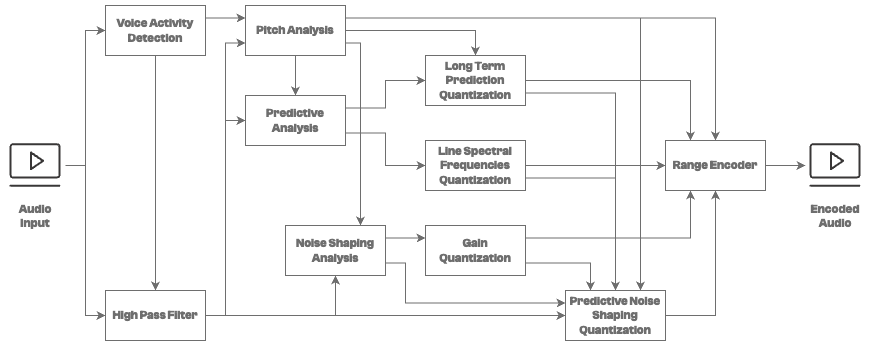
Opus Codec Encode Process
FAQs
/
What is the Opus codec, and how is it used in the streaming industry?
Opus is a highly adaptable audio codec designed for efficient compression and high-quality audio delivery. In the streaming industry, it is commonly used in applications such as VoIP, video conferencing, and in-game audio, leveraging its ability to seamlessly handle both speech and music.
/
Is Opus truly open-source and royalty-free?
Yes, Opus is developed as an open-source codec with a royalty-free license, making it an appealing option for developers seeking cost-effective integration. This removes the financial and legal barriers often associated with audio codec implementation, allowing for wider and more accessible adoption.
/
Can Opus handle high-quality music streaming, or is it just for speech?
Opus is not limited to speech; it is fully capable of streaming high-quality music by supporting a vast audio bandwidth range. Whether for low-bitrate communication or high-fidelity music, Opus adjusts seamlessly to meet the required quality.
/
Are there plans for Opus to evolve to meet next-gen audio demands?
While Opus is a robust solution for current needs, newer codecs are being developed to address emerging audio trends such as enhanced spatial sound. Although Opus’s development continues, these newer codecs may offer additional features designed for next-gen experiences.
/
How does Opus compare to other audio codecs like AAC or LC3?
Opus offers exceptional flexibility, providing lower latency than many other codecs while accommodating a wide range of audio quality levels, from narrowband to fullband. Although AAC is known for music streaming and AudioDec and Encodec are paving the way for next-gen audio features, Opus’s open-source nature and performance make it a reliable choice for real-time applications.
/
What makes Opus effective for real-time communications?
Opus excels in real-time communications due to its low latency and superior speech audio quality, ensuring minimal delay and clarity in conversation, which is crucial for applications like VoIP and live streaming. Its ability to adjust bitrates dynamically based on network conditions further enhances reliable and consistent performance.
/
How well is Opus supported by browsers and devices?
Opus enjoys broad support across leading browsers such as Chrome, Firefox, and Edge, making it highly compatible with WebRTC and ensuring it operates smoothly across a multitude of devices. This widespread support enables seamless audio streaming and communication across platforms.
/
Can Opus be used for streaming on IoT devices?
Absolutely, Opus’s efficient bandwidth usage and adaptability make it well-suited for IoT devices that rely on audio streaming, especially where bandwidth limitations exist. By reducing data usage without sacrificing audio clarity, Opus offers an ideal balance for IoT applications.