Table of Contents
RTMP vs RTSP has been a central topic in media delivery for decades. Both protocols have shaped the way the internet evolved into today’s real-time information and entertainment hub. In this blog, you’ll be reminded what RTMP and RTSP streaming protocols are, how each protocol works, their pros and cons, and where they fit best in live streaming scenarios. We’ll also compare specifications, explore common use cases, and help you decide which option is the best choice for your streaming process.
What are streaming protocols?
A streaming protocol is a set of rules that defines how audio and video data are transmitted over the internet. It ensures that both the sender and the receiver can understand each other during the streaming process. Without streaming protocols, live video streaming and on-demand playback would not be possible across different devices and networks. Learn more about live streaming protocols on our Technology page.
What is RTMP?
RTMP (Real-Time Messaging Protocol) is an application-level video streaming protocol with a long history in the media streaming marketplace. Developed by Macromedia and now owned by Adobe, RTMP was designed for the delivery of on-demand and live media between a Flash player and a Media Server over the Internet. While the Flash player is quickly being phased out, the RTMP protocol is still a widely used format across many use cases. Read our “What is RTMP?” blog for more details.
What is RTSP?
The Real-Time Streaming Protocol (RTSP) is a network control protocol designed to send low latency streams. Developed by experts from RealNetworks, Netscape, and Columbia University around 1996, the protocol defines how the data in the stream should be packaged for delivery. It also defines how both ends of the connection should behave to prepare a pathway for transportation. It then uses the Real-Time Transport Protocol (RTP) in conjunction with Real-time Control Protocol (RTCP) for actually delivering the media stream. Read our “What is RTSP?” blog to learn more.
RTMP vs RTSP
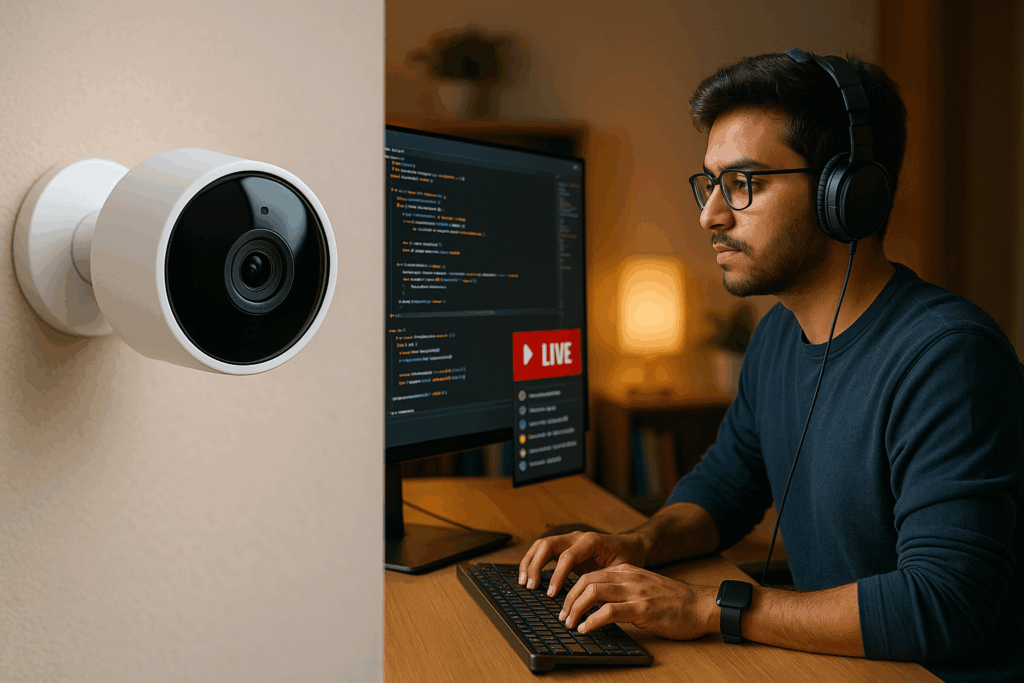
RTMP vs RTSP Specification Comparison
The decision to use RTMP or RTSP depends heavily on the use case and the devices used for live video streaming. However, let’s start by comparing the specifications of these two streaming protocols.
| Feature | RTMP | RTSP |
|---|---|---|
| Underlying Protocol | TCP | TCP + UDP |
| Latency | 250ms-3s | <100ms |
| Designed For | Flash player and Media Server delivery | Streaming media control in closed networks |
| Primary Use Case | Social platforms, ingest | IP cameras, CCTV, surveillance |
| Audio Codecs | AAC, AAC-LC, HE-AAC + v1 and v2, MP3, Speex, Opus, Vorbis. | AAC, AAC-LC, HE-AAC + v1 and v2, MP3, Speex, Opus, Vorbis. |
| Video Codecs | H.264, H.265 with ERTMP | H.264, H.265 |
| Playback Compatibility | Supported on most platforms with HLS fallback | Limited to RTSP-compatible apps |
| Device Compatibility | Widely supported by encoders | Native in IP cameras |
| Browser Support | Minimal | Requires plugins |
| CDN Friendly | Yes | No |
| Security | TLS options | Basic, less standardized |
| Scalability | Good with media server | Limited to LAN or direct |
| Accessibility & Ease of Use | Simple with software like OBS | Requires RTSP clients |
| Streaming Start Time | Fast | Fast |
| Flexibility in Media Types | Audio, video, metadata | Audio, video |
RTMP runs on TCP, offering reliability and compatibility with many platforms, while RTSP relies on RTP over UDP for much lower latency. RTMP is widely supported for ingest by social streaming platforms, whereas RTSP is the standard for IP cameras since many act as their own RTSP server.
Both support modern video codecs, but ERTMP extends RTMP with advanced features. Neither protocol is ideal for direct browser playback, though a media server can repackage streams for WebRTC or HLS. RTMP scales well with CDNs and dedicated servers, while RTSP is best suited for device-based live streaming scenarios. The best choice depends on whether reliability or ultra-low latency matters more to your streaming process.
RTMP vs RTSP Use Case
| Use Case | Recommended Protocol | Why |
|---|---|---|
| IP Cameras | RTSP | Most IP cameras natively support RTSP. Camera acts as an RTSP server. |
| IoT Devices (drones, robots) | RTSP or RTMP | RTSP for built-in support, RTMP for manufacturers like DJI. |
| Mobile devices (iOS, Android) | RTSP | Allows scalable live video streaming to mobile devices with Red5 Mobile SDK. |
| YouTube, Twitch, Facebook | RTMP | Still accepted as ingest for social streaming platforms. |
| Older Hardware Encoders | RTMP | Some only support RTMP streams. |
IP Cameras – RTSP
A vast majority of IP cameras support the RTSP protocol so it’s a pretty easy selection for that one. IP cameras were around well before the invention of RTMP, and since RTSP was (and is) a very effective solution, there was no need to change it. Thus, the earlier development of RTSP encouraged the adoption of RTSP for IP cameras.
There are various uses for IP cameras. Crowd surveillance or traffic monitoring for law enforcement agencies, home monitoring systems, even just for fun weather cameras in remote locations.
Due to the way that IP cameras work, the camera itself acts as an RTSP server. This means that in order to connect to the IP camera server and consume the stream, you have to run an RTSP client. Red5 Pro’s Restreamer plugin does exactly this by providing a way to connect to an RTSP stream as a client and restream it to other Red5 Pro supported endpoints, like a browser running WebRTC. Learn more details on the Restreamer plugin from this post.
IoT Devices – RTSP or RTMP
Drones, robots and other devices benefit greatly from sending live video. The video not only allows us to see what the device sees but also assists in the control of the device. RTSP support is often built right into the drone or IoT software and is a common way to access the video feed. However, some manufacturers, such as DJI, use RTMP so this may depend upon the specific device in use.
For example, firefighters can gather information about current fire conditions and use that information to help coordinate their operation. Aerial surveying is also useful for maintaining infrastructure by examining roads and power lines or even conducting geologic surveys. Interestingly, there are telepresence and remote surgery robots which allow doctors to speak and operate on patients from afar.
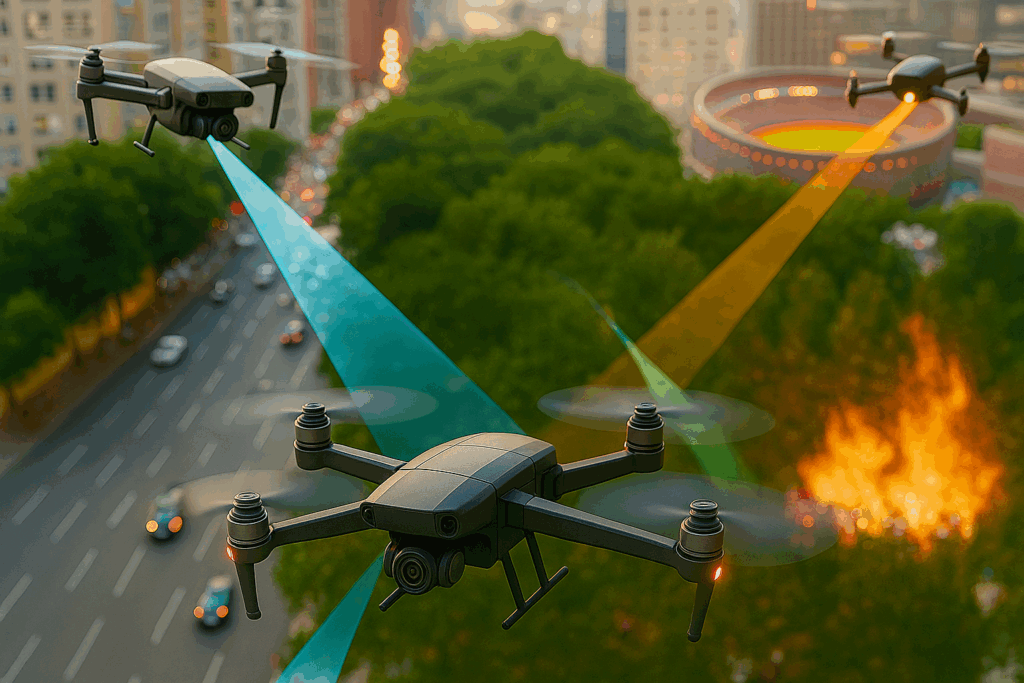
Controlling drones and robots, would not be possible without low-latency as any delay in the video between what the video sends back and the actual physical location of the device could create a problem.
Mobile devices – RTSP
Normally, mobile devices do not accept RTSP as they do not have native support for it.
However, the Red5 mobile SDKs uses RTSP to deliver live streams to and from mobile devices on a native app. By creating a single connection per subscriber/publisher client, both Android and iOS devices can use RTSP as a simple way to connect a large number of broadcasters to a large number of subscribers.
For example, a single c5.large instance (2CPU 4GB) running Red5 Pro and streaming a 720p video, can handle 200 WebRTC subscribers or 920 RTSP connections. With a reduction of almost 4 times in bandwidth costs, the additional cost for the Red5 Pro Mobile SDK will be quickly recouped.
YouTube, Twitch, Facebook – RTMP
Even though 2020 marks the end of life for Flash Media Player, the RTMP protocol will still be useful. For example, Red5 Pro’s implementation of RTMP is able to achieve sub-one-second latency. Though RTMP is synonymous with Flash, the protocol will outlive the player.
Due in part to its widespread use in the past, and the flexibility of the protocol, RTMP is still used as an ingest protocol by most third-party streaming applications such as YouTube Live, Twitch and Facebook.
Another interesting third party service that makes use of RTMP is Zoom. Zoom supports an RTMP stream output of your video call which allows for interesting use cases like creating your own Webinar or remote conference.
Older Hardware Encoder – RTMP
Some hardware encoders (especially older ones) will only accept RTMP streams. That makes it pretty obvious which one to use.
However, it should be noted that many hardware encoders are switching to SRT based encoders due to the fact that it is open-source and optimizes live stream delivery through firewalls and across unreliable networks.
Conclusion
RTMP vs RTSP is not about choosing a winner but about matching the protocol to the right situation. RTSP excels with IP cameras, drones, and other IoT and mobile devices. RTMP remains valuable for ingest into social platforms, third-party applications, and older encoders. By understanding the strengths of each, you can select the best choice for your specific live streaming scenarios and ensure reliable delivery for your audience.
Try Red5 For Free
🔥 Looking for a fully managed, globally distributed streaming PaaS solution? Start using Red5 Cloud today! No credit card required. Free 50 GB of streaming each month.
Looking for a server software designed for ultra-low latency streaming at scale? Start Red5 Pro 30-day trial today!
Not sure what solution would solve your streaming challenges best? Watch a short Youtube video explaining the difference between the two solutions, or reach out to our team to discuss your case.

The Red5 Team brings together software, DevOps, and quality assurance engineers, project managers, support experts, sales managers, and marketers with deep experience in live video, audio, and data streaming. Since 2005, the team has built solutions used by startups, global enterprises, and developers worldwide to power interactive real-time experiences. Beyond core streaming technology, the Red5 Team shares insights on industry trends, best practices, and product updates to help organizations innovate and scale with confidence.