Table of Contents
Red5’s participation in this year’s National Association of Broadcasters Show was a head-spinning trip into the future of broadcasting where we’re happy to report we felt quite at home.
Most notably, amid an outpouring of interest in the new real-time streaming standard known as MOQ, we found ourselves in a growing vanguard of platform providers preparing for what promises to be a groundswell in the transition to next-gen streaming. Against a backdrop of AI-driven innovation that’s now deeply embedded across the M&E ecosystem, it didn’t take a lot of imagination to envision what’s in store for everyone whose business depends on video streaming.
Of course, that vision has long been the motivation behind our development of the Experience Delivery Network (XDN) Architecture our customers employ to exploit the potential of real-time interactive video applications at whatever user scales suit their purposes. But, as explained here, MOQ lends new energy to that vision by providing a standards-based multi-vendor path all can take with far less complexity than either the traditional one-way high-latency system that prevails today or the adaptations to use of the WebRTC protocol that we and others support.
The MOQ emergence was the perfect complement to the outpouring of other innovations that characterized this NAB Show. Gone were the gee-whiz pitches touting AI and the cloud as emerging market movers, replaced by groundbreaking solutions tailored to broadcasters’ demands for open-source interoperability. This is bringing seamless operations of AI-infused solutions into play across hybrid private and public cloud iterations with growing emphasis on cloud-native virtualization.
The Biggest Attention Getter
Nothing matched the buzz surrounding MOQ. As became abundantly clear with the outpouring of early launch initiatives, use-case demos and other expressions of support at NAB, the foundational MOQ Transport platform has moved in a remarkably short time from an Internet Engineering Task Force (IETF)-backed draft proposal in 2022 to status as the platform with enough momentum to take the industry where it wants to go. It will take a while before MOQ-based real-time streaming with its support for tunable latencies from a few hundred milliseconds to multiple seconds comes close to the ubiquitous availability of today’s HTTP-based streaming, but starting now a MOQ-based global streaming environment is available for anyone who wants to move in that direction.
In our case, customers can begin exploring the possibilities over the MOQ Transport infrastructure we’re providing in partnership with global CDN operator CacheFly. Other providers of global cloud infrastructures who were at the show with demos touting operationally available support for MOQ included Cloudflare, Oracle Cloud Infrastructure (OCI), Broadpeak, Ateme, and Ant Media. Vendor partners helping to bring these demos alive included streaming technology suppliers like Bitmovin, Synamedia, Ateme, Norsk Media, Nomad Media, EZDRM, Wowza, Jeket, Caton and others, frequently with the assistance of engineering groups like Qualabs and Fraunhofer FOKUS.
In tandem with all of this, the OpenMOQ Software Consortium, a rapidly growing ad hoc body whose founding members include Akamai, CDN77, Cisco, Red5, Synamedia and YouTube, has been coordinating key steps at the media layer that are essential to bringing use cases to life over MOQ Transport infrastructure. The consortium is serving as an informal conduit for a bevy of independently developed MOQ media client players that can be used with streaming formats, including the IETF’s MOQ Streaming Format (MSF) and CMAF-enhanced version of MSF (CMSF) as well as others that are emerging as MOQ-compliant formats.
The latter group includes formats designed for special use cases such as IoT operations that might not even involve video or multiple on-the-fly AI-fueled multilingual translations of A/V sessions that can take advantage of the multi-track MOQ Transport architecture to do things that would be extremely hard if not impossible to execute over other streaming modes.
Significantly, as described in depth here, the consortium has advanced the cause of ensuring interoperability at the playback end with endorsement of the Playa player framework developed by Raymond Lucke, Red5 Senior Software Architect, and Todd Anderson, Red5 Senior Software Engineer, as a template all developers can use to ensure conformity with the IETF standard.

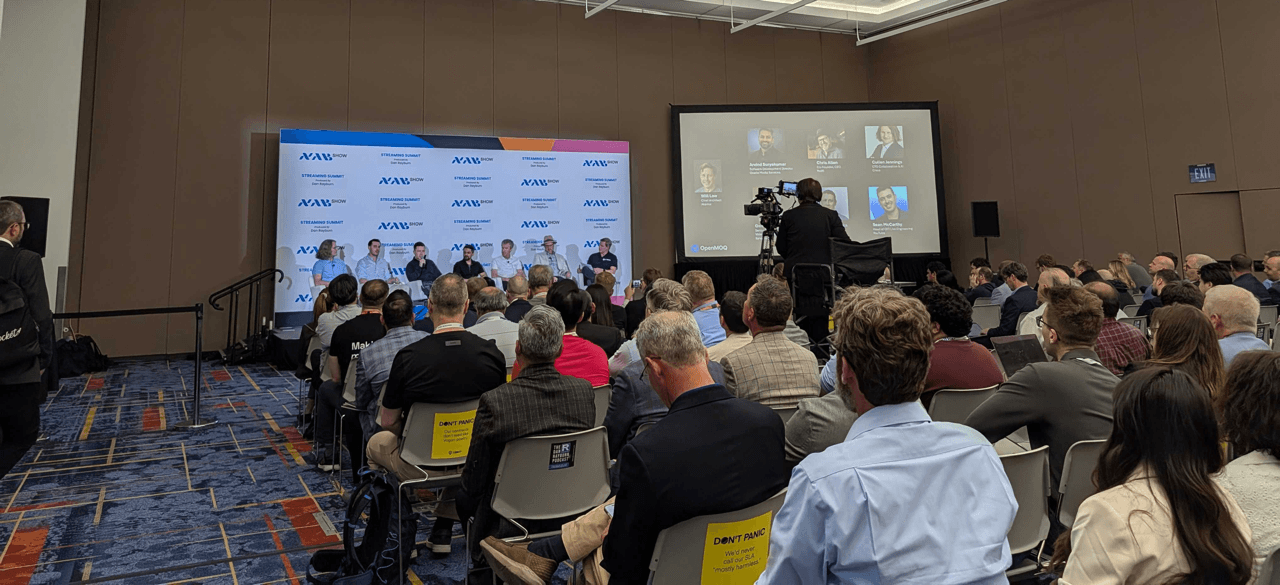
We got an early taste of the impact MOQ would have at NAB on the first day of the show’s Streaming Summit when an overflow crowd filled the large meeting room devoted to the session on MOQ, a first for this annual event. Moderated by Will Law, chief architect for the cloud technology group at Akamai and a leader in the IETF MOQ initiative, the panel included Gwendal Simon, senior director for video network technology at Synamedia, Sean McCarthy, head of OTT live engineering at YouTube, Tomas Kvasnicka, vice president of engineering at CDN77, Cullen Jennings, CTO for A/V collaboration and AI at Cisco Systems, Arvind Suryakumar, software development director at Oracle Media Services, and our CEO and co-founder Chris Allen.
Watch the recording on Youtube.
The speakers’ depictions of the many ways they were putting MOQ to use was a reflection of the platform’s versatility that echoed across the show floor. Some, including Suryakumar, Kvasnicka and Allen, talked about the multiple use cases their MOQ implementations support while Jennings focused on interactive video communications as employed with Cisco’s Webex service, McCarthy explained what MOQ means to YouTube’s massive streaming operations, and Simon described Synamedia’s plans for using MOQ to link dispersed production workflows and streamline playout. It’s also notable that Will Law revealed Akamai has taken an initial step in the use of MOQ with implementation of relays for use in trials across its global cloud compute platform.
MOQ on the NAB Show Floor
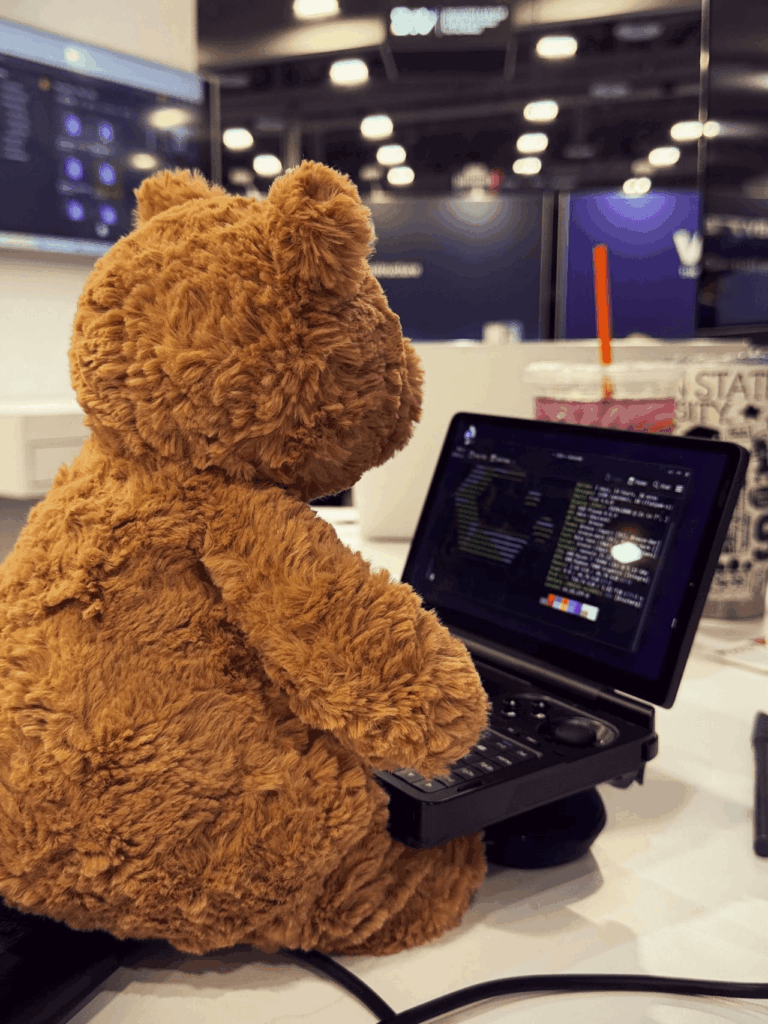
Throughout the show the Red5 team encountered similar signs of industry enthusiasm for MOQ in the flow of visitors to the many locations hosting demos we were involved in as well as in the booths we visited where other MOQ-related demos were running. And, we have to admit, we added a little attention-drawing power with the aid of Brownie, the teddy bear Chris Allen’s daughter sent with him for company in her absence.
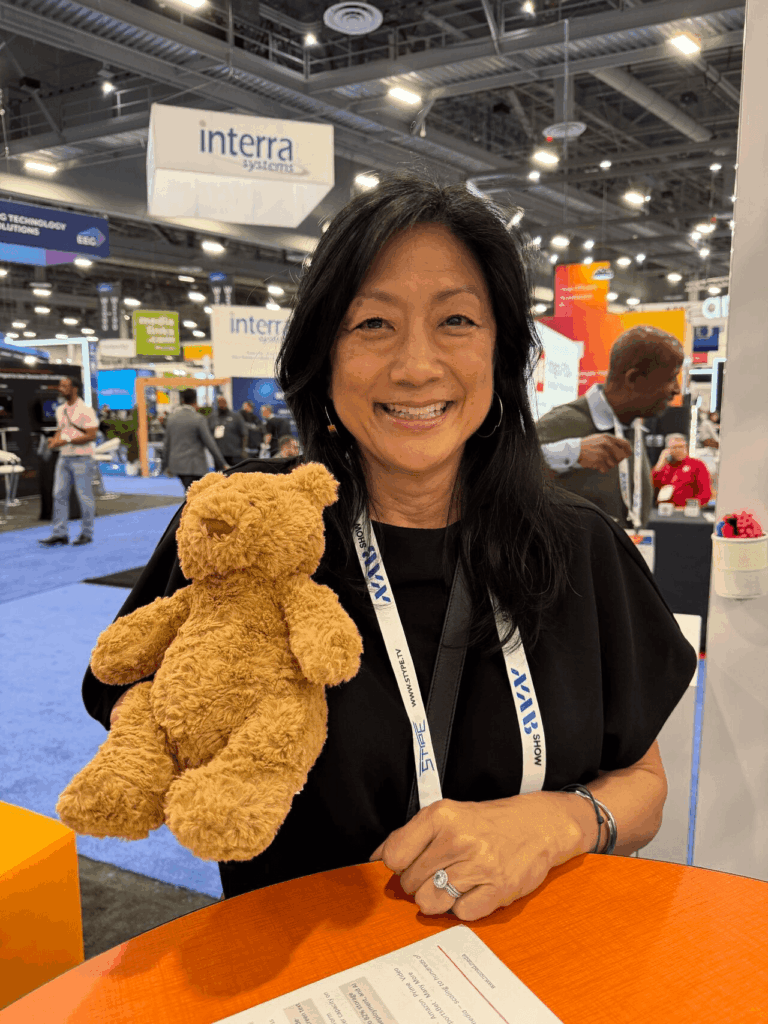

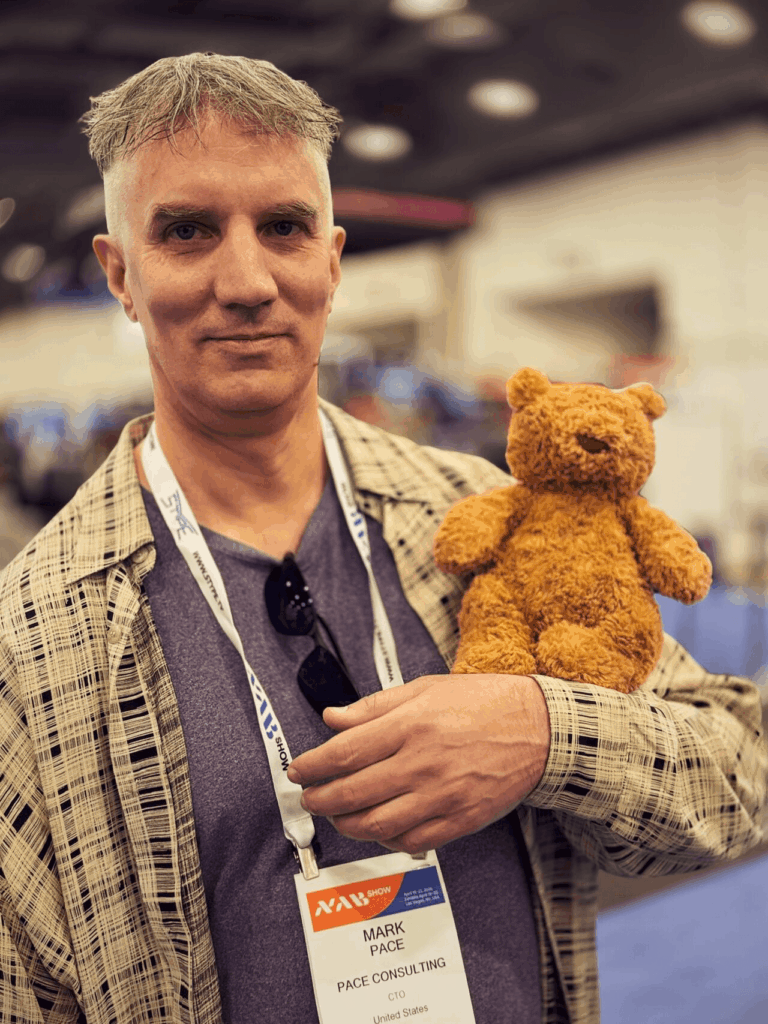
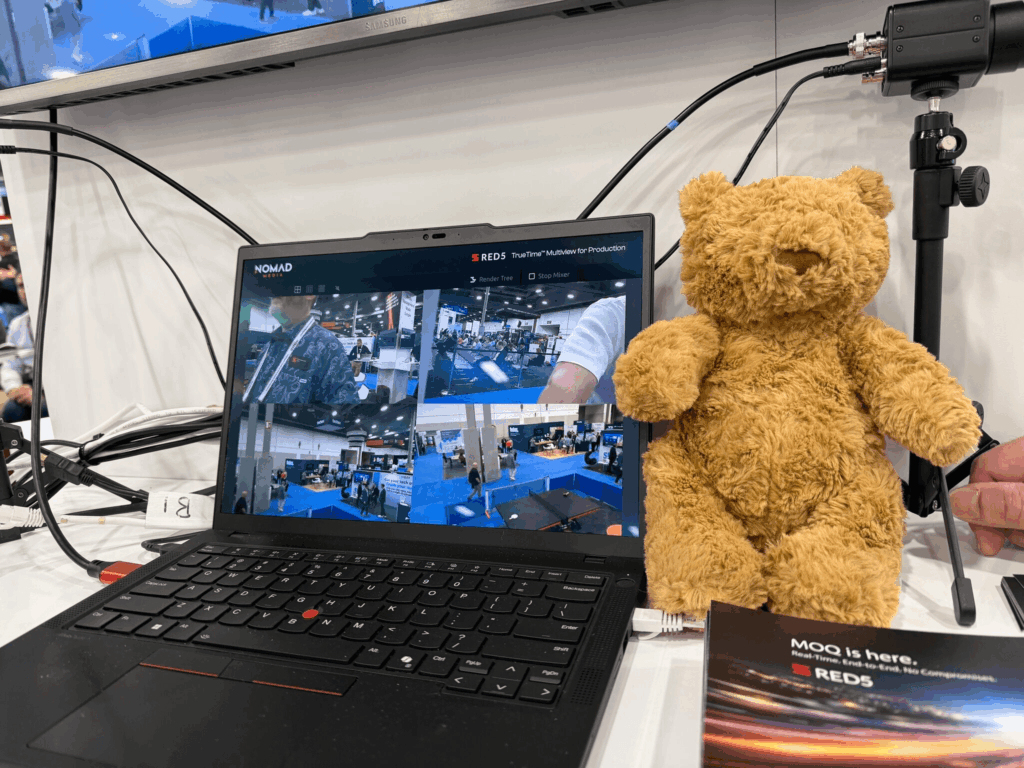
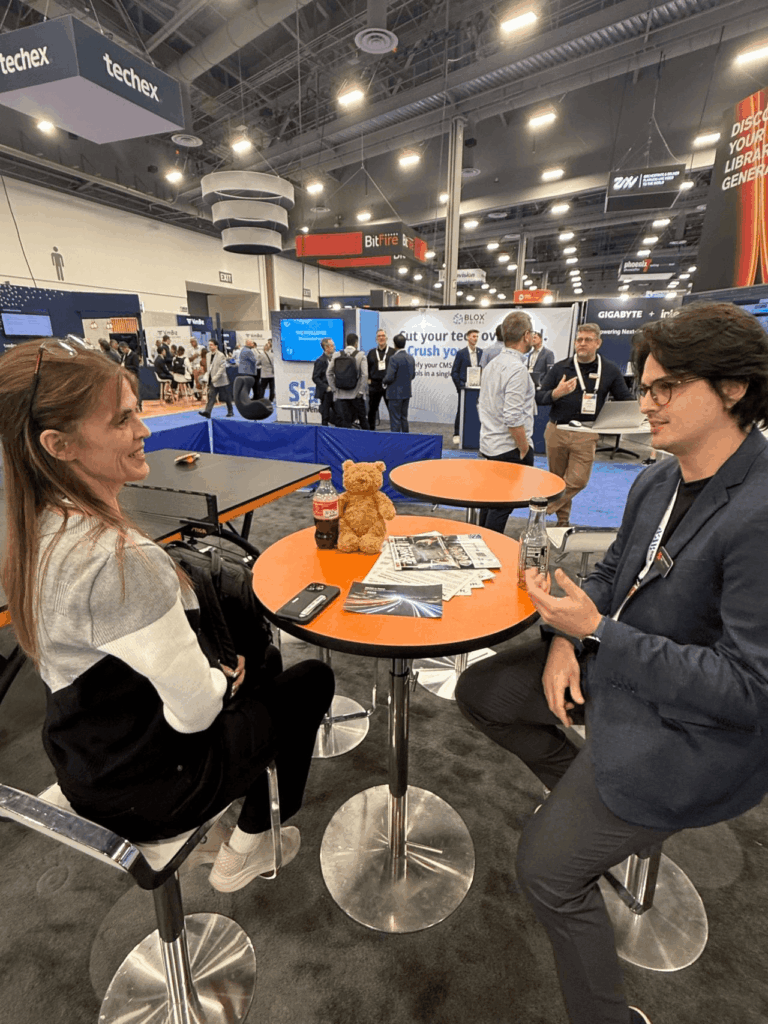

Altogether, the exhibits provided a compelling look at what’s in store as MOQ takes hold. The demos not only showed off the protocol’s streaming performance with a wide range of applications capabilities; they provided confirmation interoperability is a functioning reality across multiple MOQ implementations.
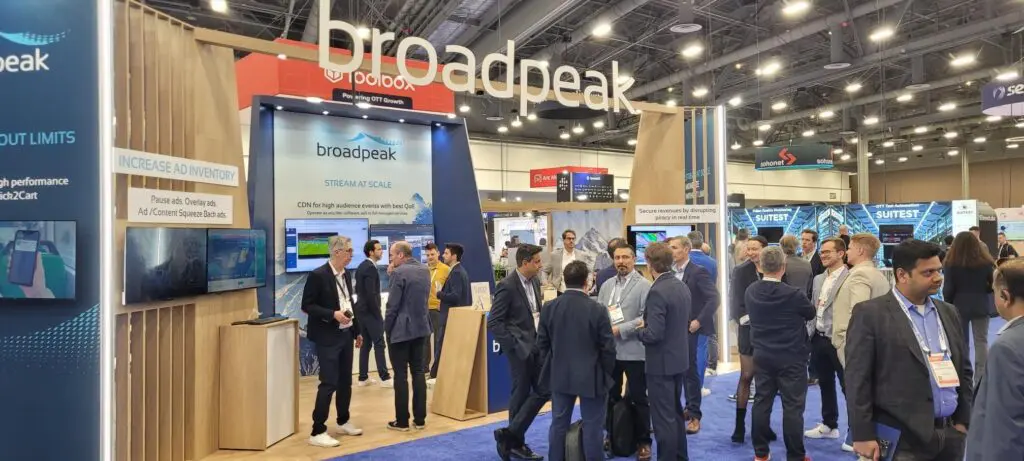
Broadpeak’s booth at NAB 2026. Source: Broadpeak’s LinkedIn profile
One demonstration of MOQ interoperability occurred at multiple vendor booths with connectivity provided by Cloudflare and Broadpeak CDNs utilizing the new MOQ-optimized Oracle Video @ Edge (OVE) service running on the OCI global cloud compute platform. OVE is Oracle’s initial stab at creating the type of architecture aligning ingestion, transport, playback and telemetry into a single fabric that Red5 is bringing to MOQ operations with the fully realized, functionally rich XDN Architecture. Such architectures will be instrumental to enabling universal adoption to MOQ streaming, which means, from our and other OpenMOQ Consortium members’ perspectives, the more the merrier.
The entry point in the joint NAB demo with OVE was provided by Ateme’s encoding platform with the packaging contribution to the workflow on display at Broadpeak’s booth. The packaged content was ingested into Broadpeak’s CDN serving partner ISPs and the global CDN operated by Cloudflare. Playback for the demo was supported by Bitmovin’s latest version of its popular Web SDK player platform, which has been completely re-architected and branded Player Web X.
While retaining basic core functionalities enabling rapid interactions between player commands and device processors, Player Web X closely conforms to the open-source ethos with plug-in support, including MOQ, for all additional features relating to specific streaming formats. Confirming this versatility, Bitmovin, along with its playback role in the OVE group demo, showcased work with Cloudflare supporting playback with multiple MOQ iterations running on its CDN, which in the MOQ world means eliminating the need for custom integrations or proprietary handshakes. The plug-in-oriented Player Web X architecture also leaves room for building Player Web X-based MOQ players conforming to the Playa template endorsed by the OpenMOQ Consortium.
Cloudflare’s presence was widely felt. Currently supporting MOQ testing with draft 14 of the emerging standard and signaling draft 16 support is in the offing, the company has taken a leading role in MOQ CDN transport with a long-standing deployment committed to interoperability with a wide range of MOQ players and their attendant streaming formats.
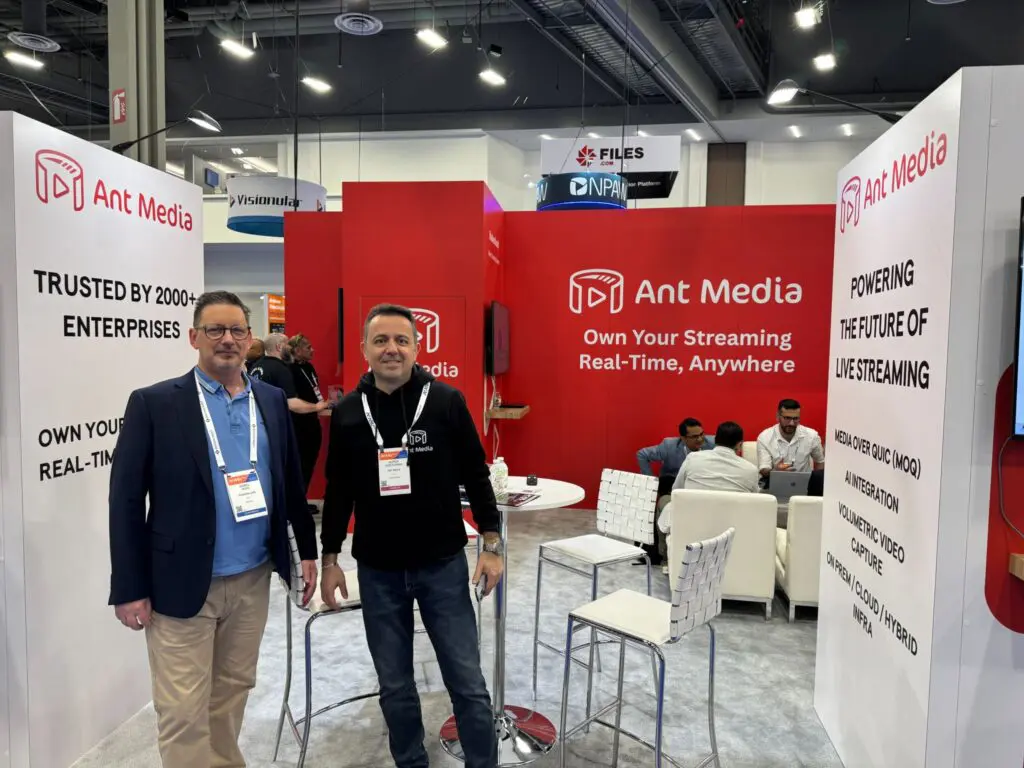
Ant Media’s booth at NAB 2026. Source: Ant Media’s LinkedIn profile.
Taking a different tack with MOQ-related demos, Ant Media introduced a MOQ-Lite plug-in for its Ant Media Server, which it demonstrated in side-by-side comparisons with its long-standing AMS support for real-time interactive streaming via WebRTC. The vendor drew much interest in the demo, which it accommodated with what seemed to be the largest NAB exhibit space it has ever had. It appeared that Ant Media remains focused on the long-standing developer-oriented approach to self-managed real-time streaming, in contrast to the Auto-Managed Live Streaming Service it announced over a year ago with a beta launch on AWS but has said little about since, other than to acknowledge on its website that users are encountering problems with “AWS errors.”
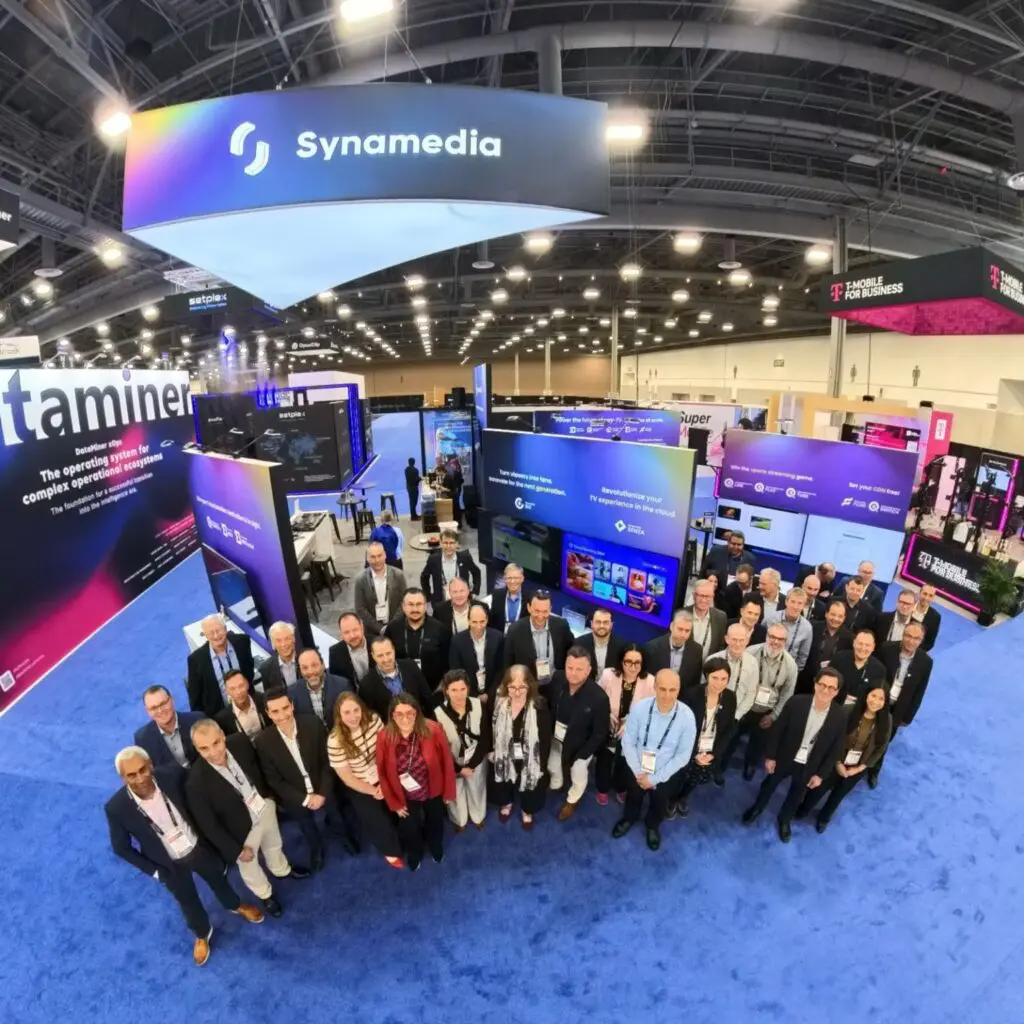
Synamedia’s booth at NAB 2026. Source: Synamedia’s LinkedIn profile.
There were also impressive demonstrations of MOQ initiatives by OpenMOQ Consortium member Synamedia and the cloud-native production workflow provider Norsk Media on the B2B production and playout sides of live broadcast operations. In this domain MOQ is gaining interest as a real-time alternative to the widely used SRT playout transport option, which has lost favor in many quarters owing to problems with buffering and other issues.
Synamedia’s focus was on unified multi-track playout based on its Quortex PowerVu platform, enabling publishers to deliver content to affiliates via the real-time publish/subscribe model supported by MOQ as well as via HLS and DASH streams or traditional MPEG TV channels. Norsk’s demo linked into Cloudflare’s MOQ relay network to show how MOQ fully integrated with its cloud-native Studio production framework facilitates real-time previews of dispersed technicians’ input on Studio workflows as well as real-time playout to producers’ affiliates.
The Red5 MOQ Demos
The backend B2B and D2C benefits of MOQ were on display in our demonstrations of what can be accomplished when MOQ is integrated with XDN Architecture. We were pleased to see Amazon Prime principal product manager Nicolas Weil gave this a nod in his pre-show blog “Tracking MOQ in the Wild,” where he pointed to our partner Nomad Media’s booth as the place for visitors to start in witnessing the full scope of MOQ interoperability and functionality.
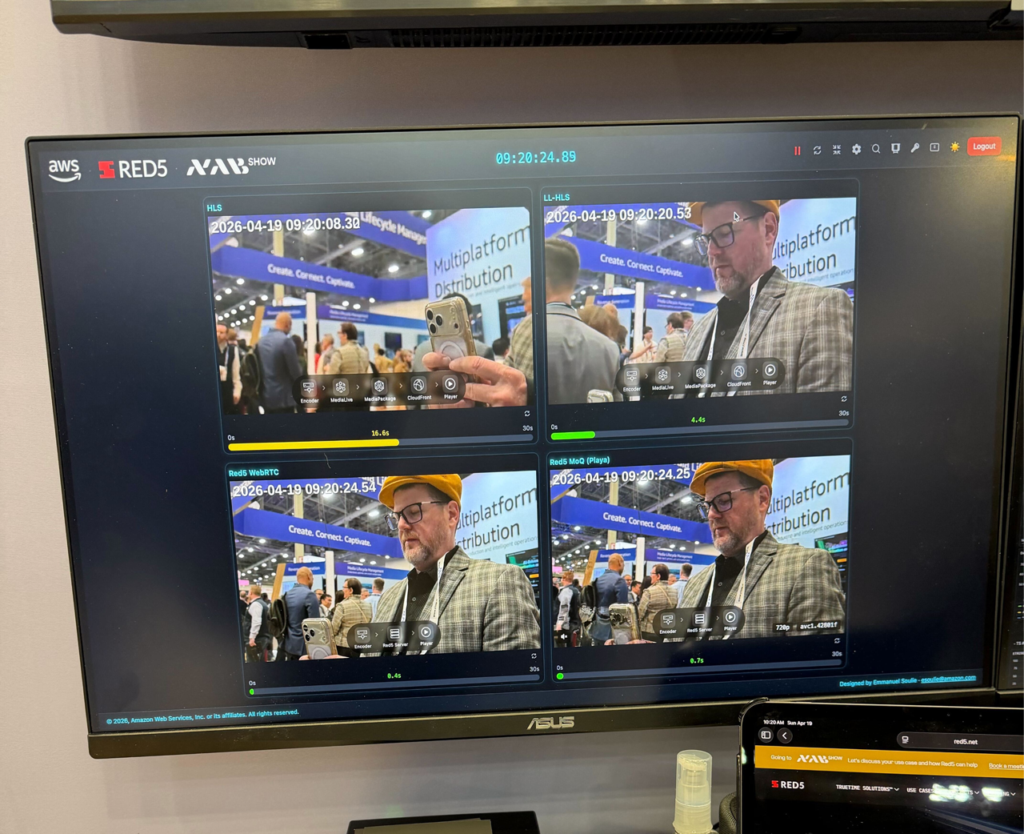
Our demo at the AWS booth shows the difference in latency between WebRTC, HLS, LL-HLS, and MOQ playback.
Nomad’s booth was one location, along with the AWS and CacheFly booths, where we showcased our work with MOQ, often involving the ultra-low encoding contributed by two other partners, Videon and Osprey Video. And we were active in business discussions involving other partners as well, including OCI, which hosts our managed Red5 Cloud service, PubNub, our partner in delivery of interactive data applications with XDN operations, and Showfer Media, the provider of postproduction tools unifying playout, quality assurance, analytics and programmatic ad scheduling and placement across streaming and linear programming.
Showfer has teamed with Red5 to enable server-side ad insertion (SSAI) in WebRTC and HLS streams, with the addition of SSAI on MOQ streams in the offing. Spending time with Showfer executives as they toured the show, we found broadcasters looking for a solid monetization path into next-gen streaming were very glad to learn about our SSAI integrations with Showfer’s Ad Storm platform.
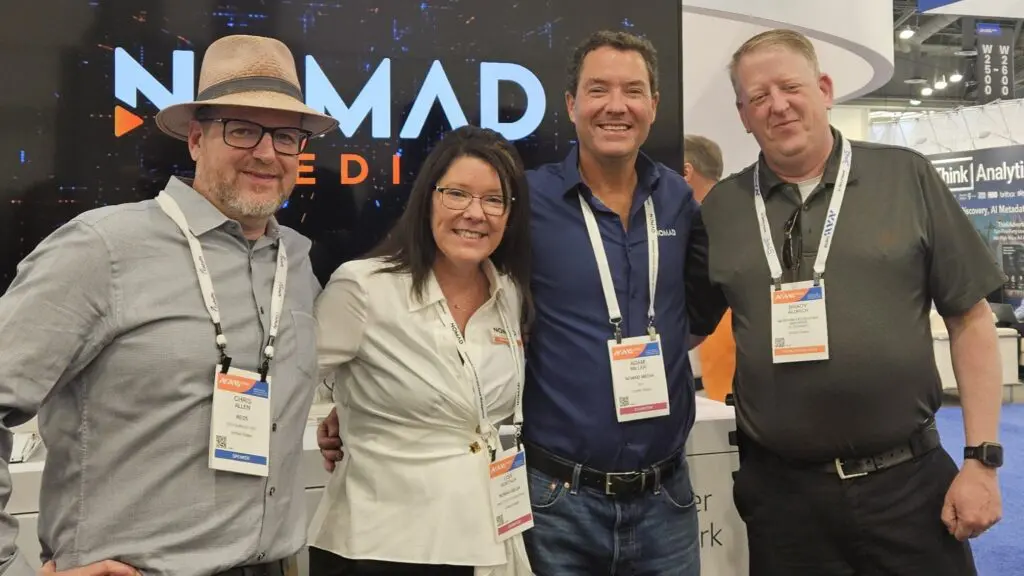
It was great to see Brady Aldrich, the A/V engineer for Montana State’s Legislative Services, at NAB. We’ve been working with Brady to set up a new IPTV streaming system for OTT distribution and in partnership with Nomad Media.
At Nomad Media, a long-standing partner we’re working with in XDN projects like our previously reported highway and aerial surveillance operations in California and support for a private agency’s command center access to dispersed maritime and aerial drone surveillance, we showcased our MOQ player and relay solutions working in open-source harmony with other OpenMOQ Consortium members’ platforms. Our ability to ingest live content into the MOQ Transport system from feeds delivered over any of the commonly used protocols, including RTMP, RTSP, SRT, Zixi, WebRTC, HLS and Low-Latency HLS, was especially important to showing broadcasters they can take advantage of MOQ in sports and other live productions without disrupting existing operations.
Our Nomad demos also highlighted the use of some of our TrueTime Solutions™ in XDN deployments on the backend as well as distribution side of operations, including anywhere MOQ is in play. In the case of TrueTime MultiView™ we showed how synchronized multi-camera streams, real-time mixing, and monitoring workflows can be used on both fronts. It can facilitate real-time decision-making and operational awareness enhanced by AI-powered object detection and quality assurance in dispersed production workflows, and it brings a new level of user experience to recipients of live-streamed sports and other content.
Likewise, we showed how TrueTime Meetings™ can be used to bring real-time interactive video communications directly into live streaming workflows wherever they occur. Seamless crossover from MOQ streaming to TrueTime Meetings opens an immediate path to a new realm of applications that otherwise might take a long time to develop waiting for the multi-directional video capabilities of MOQ to mature.
Adding to the display of XDN versatility at the Nomad booth we ran a side-by-side closed-network display of a live camera feed from the show floor delivered over MOQ, WebRTC, Low-Latency HLS and HLS with metrics comparing latency and performance in real time. And we showed this can be done in the public cloud environment as well by partnering with AWS to demonstrate the side-by-side multi-protocol comparison in their booth.

AWS badges earned by Red5.
Red5’s tightening partnership with AWS was another highlight of our NAB Show experience as we continued ongoing discussions about how we can work together. With Red5 Cloud now available on AWS Marketplace, we are recognized as an AWS Media & Entertainment Competency Partner, which validates our expertise in scalable, real-time video workflows. We’re also the first provider of real-time streaming support to have been authorized for pre-integration with AWS Wavelength Zones, which as described here, serve as direct links between 5G mobile cell sites and AWS infrastructure.
Now, customers choosing to test MOQ with us have the option to sign up as beta-testers through AWS Marketplace. And when we move to public release of MOQ in Red5 Cloud later this year, that, too, will be available through AWS Marketplace.
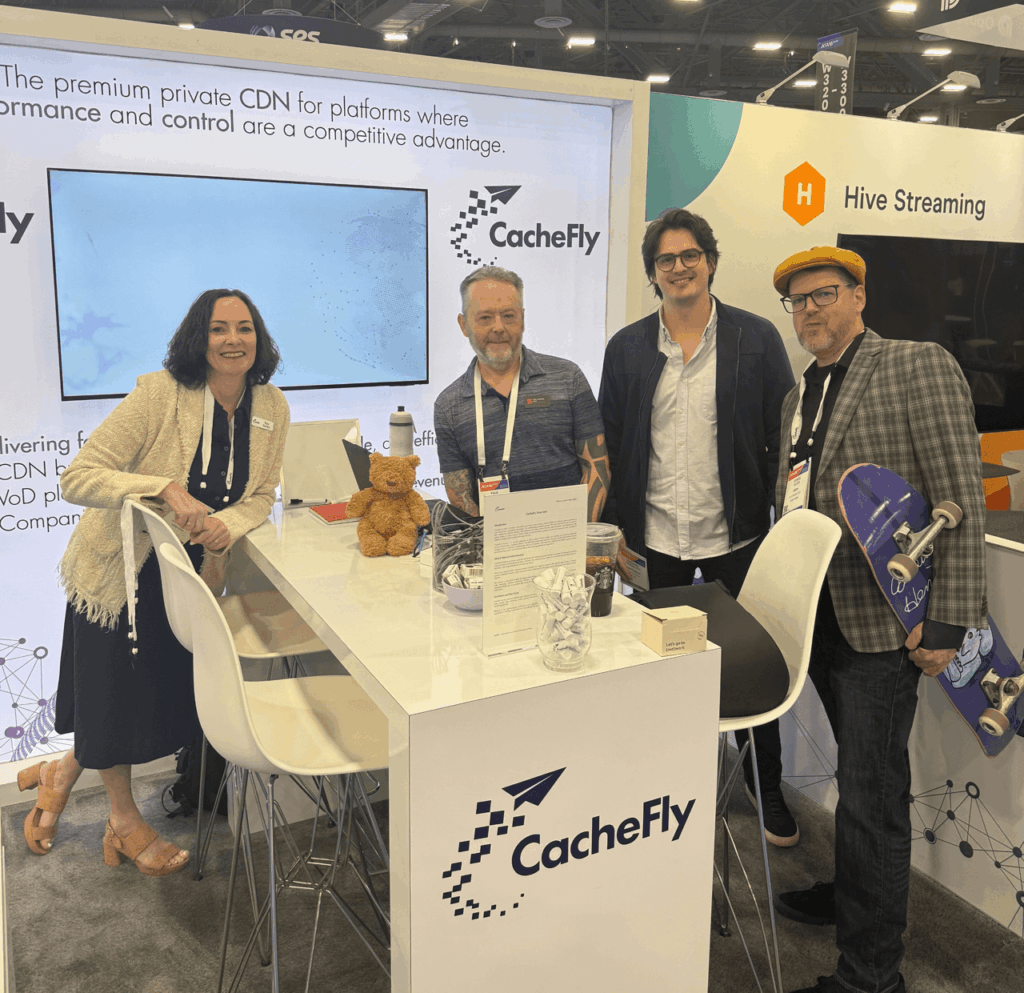
CacheFly’s booth at NAB 2026.
Above all, our goal at NAB was to foster interest in our rollout of MOQ beta testing with CacheFly. As highlighted by our demo at CacheFly’s booth, we’re enabling customers to launch beta tests in preparation for our joint commercial rollout of MOQ operations this summer.
In these workflows, live streams are ingested into Red5, processed through our video packaging layer, and delivered via CacheFly using either MOQ or HTTP-based protocols like HLS and LL-HLS to deliver ultra-low latency streams where real-time performance matters most while still supporting traditional formats as needed. We’ve already contracted with a few companies to begin tests with more to come as we follow up on the high interest expressed by booth visitors and people who have contacted us through our website.
Conclusion
These are rambunctious but anxious times for the M&E industry. The impact of service fragmentation across traditional and OTT outlets, battles over consolidation through M&A, and lack of clarity about where things stand in the macroeconomy left little room for complacency at this year’s show.
But the difference this year, even compared to just a year ago, was the relief that comes with seeing the monumental progress the industry has made in finding an open-source path to freeing everyone from vendor lock-in as they pursue best-of-breed solutions. There was an abundance of solutions touching on every aspect of program production, monetization, user engagement and distribution that comported with these new standards.
Along with MOQ, some of the more prominent protocols included Time-Addressable Media Store (TAMS) for eliminating the traditional boundary between live production and VOD workflows, Media eXchange Layer (MXL) to facilitate use of containerized virtualization to support shared-memory media exchanges in cloud server clusters, the anti-deep-fake content provenance standard developed by the Coalition for Content Provenance and Authenticity (C2PA), and Common Media Server Data-Media Quality Assessment (CMSD-MQA) to automate quality control based on human perception metrics.
As we’ve often said, with the understanding that the adoption of MOQ will take time, broadcasters and everyone else in need of real-time video solutions can forge ahead to meet their goals with the capabilities XDN Architecture and our toolsets and SDKs bring to bear with use of WebRTC. As validated by what we were able to demonstrate at NAB, they can proceed with full confidence that MOQ will be available with their XDN implementations whenever they’re ready to make it available for whatever use cases they believe will benefit from its application.
Clearly, with the joint Red5 Cloud/CacheFly rollout of end-to-end MOQ-CDN and media-layer support for a wide array of applications together with the Cloudflare MOQ relay platform and nascent initiatives underway at OVE, Akamai and AWS, we’re on the cusp of a new era. Now the ball is in users’ courts to make the commitments to kicking MOQ tires that represent the industry’s best shot at achieving next-gen streaming breakout.

The Red5 Team brings together software, DevOps, and quality assurance engineers, project managers, support experts, sales managers, and marketers with deep experience in live video, audio, and data streaming. Since 2005, the team has built solutions used by startups, global enterprises, and developers worldwide to power interactive real-time experiences. Beyond core streaming technology, the Red5 Team shares insights on industry trends, best practices, and product updates to help organizations innovate and scale with confidence.