Table of Contents
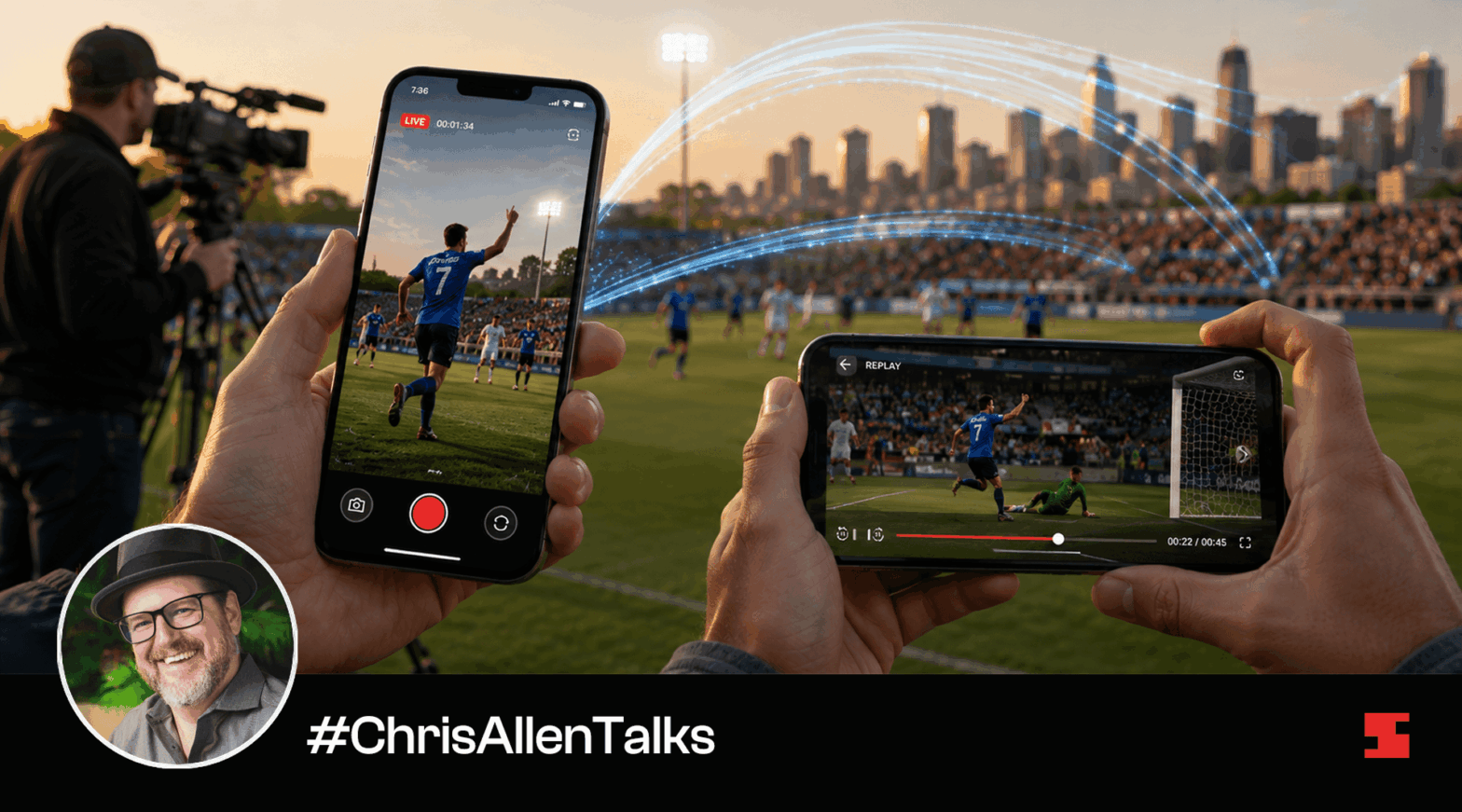
MOQ mobile app development could make phones first-class endpoints for real-time media, not just screens for watching a stream. Native iOS and Android applications could publish camera, microphone, screen, and application data to a relay while also subscribing to live video, audio, and related data.
That does not make MOQ a production-ready replacement for every mobile WebRTC workflow. WebRTC has mature SDKs, broad device support, and a proven role in calls and interactive sessions. MOQ is earlier, but its relay-oriented publish-and-subscribe model creates an interesting foundation for one-to-many and large-scale interactive applications.
This article builds on a recent LinkedIn post of mine that generated significant engagement among streaming and mobile professionals, particularly around ICE complexity, native SDKs, mobile reliability, and QUIC performance during network congestion.
Why MOQ Mobile Matters
When people discuss MOQ (Media over QUIC), the conversation often centers on relays, content delivery networks, or browser clients. Those areas matter, but native mobile applications may become one of MOQ’s largest practical categories because phones are already central to live commerce, creator platforms, sports, remote monitoring, public safety, and field operations.
A phone is both a media source and a media destination. It has cameras, microphones, hardware codecs, a display, sensors, local storage, and a network connection that can move between Wi-Fi and cellular service. A useful mobile streaming SDK therefore needs to do more than play video. It should give developers a coherent way to capture, publish, discover, subscribe to, render, and control real-time media.
MOQ Transport organizes media and other application data as addressable objects within tracks and groups. A mobile client can publish or subscribe through a relay, while the relay handles fan-out and can participate in a wider delivery network. The current IETF MoQ Transport draft is still evolving, so implementers need to track versions and test interoperability rather than assume that every draft or library works with every other one.
The Emerging MOQ Mobile SDK Ecosystem
Native app support depends on libraries that expose protocol capabilities through APIs mobile developers can actually use. As I discussed in my article about MOQ hardware support, the protocol will not succeed through specifications alone. It needs practical implementations across clients, relays, encoders, players, and devices.
One foundation is MOQ5, an open-source native C library developed by the Red5 team and published through OpenMOQ. It provides a transport-independent protocol core plus higher-level services for sending and receiving media. The MOQ5 repository currently describes the project as pre-1.0 and explicitly tells developers to verify it against their own endpoints before depending on it in production.
MOQ5 has Swift integration work for Apple platforms, and Kotlin support is part of the Android direction. My team at Red5 is building iOS and Android SDKs on top of MOQ5. The goal is not playback alone. We want native applications to publish and subscribe through MOQ, which would allow the same phone to capture a live event, receive other tracks, and exchange related application data.
OpenMOQ member Bitmovin is also working to incorporate MOQ5 into its mobile player efforts for iOS and Android. This is ecosystem development rather than a statement that generally available MOQ playback has already shipped in every Bitmovin mobile product.
There are separate mobile efforts outside MOQ5 as well. Software Mansion’s MoQKit provides preview Swift and Kotlin APIs for publishing and playing low-latency streams on iOS and Android. It is built on Luke Curley’s Rust-based moq-lite implementation, not on MOQ5, and its public repository warns that APIs and relay compatibility may still change. That distinction matters when comparing demos or planning interoperability tests.
How MOQ Mobile Differs From WebRTC
The question is not whether MOQ is newer than WebRTC. The useful question is whether its connection and distribution model solves a specific application problem with less operational friction.
| Decision factor | MOQ | WebRTC |
|---|---|---|
| Connection model | Client establishes a QUIC-based session with a server or relay | Endpoints use ICE connectivity checks, often with STUN and TURN |
| Typical topology | Publish and subscribe through relays designed for distribution | Peer-to-peer or media-server-based sessions |
| Mobile maturity | Early SDKs, changing drafts, and active interoperability work | Mature native SDKs and broad production deployment |
| Large-scale fan-out | Relay architecture is part of the protocol design | Usually provided by a selected media-server platform |
| Interoperability goal | Standardized objects, tracks, subscriptions, and relay behavior | Standardized media transport, with application control often vendor-specific |
| Best current fit | Evaluation and emerging relay-based interactive broadcasts | Production calls, conferencing, and established interactive streaming |
A Simpler Server Connection, Not a Zero-Complexity System
WebRTC uses Interactive Connectivity Establishment (ICE) to discover and test network paths, with STUN and TURN supporting NAT and firewall traversal. This is proven technology, but it introduces signaling, candidate gathering, connectivity checks, relay credentials, and failure cases that developers must understand. The IETF’s WebRTC IP address handling requirements also explain why candidate discovery creates privacy considerations that implementations need to manage.
A native MOQ client typically connects to a known relay over QUIC and does not use ICE to establish that client-to-server session. That can simplify one part of the connection process, but it does not remove TLS, authentication, authorization, relay discovery, congestion control, recovery, or network policy. It is a different operational model, not an automatic shortcut around every networking problem.
Relay Interoperability and Multi-CDN Potential
Scaled WebRTC platforms can use different APIs, authentication models, tokens, routing logic, and media-server behavior. WHIP and WHEP standardize important ingest and egress workflows, but they do not standardize an entire multi-CDN control plane.
MOQ is designed so compatible publishers, subscribers, and relays can exchange the same protocol objects. That creates a path toward relay-to-relay distribution and vendor choice closer to what media companies expect from HLS and DASH delivery. It does not guarantee instant portability. Draft versions, namespaces, catalogs, authorization, caching policy, and operational interfaces still need to align across providers.
Where Mobile MOQ Could Create Value
- Live commerce: A host could publish camera and microphone tracks from a phone while shoppers subscribe to the live presentation and receive synchronized product or inventory data.
- Creator platforms: The same application could support going live, watching other creators, switching renditions, and exchanging chat or control data without treating publishing as a separate product.
- Sports experiences: Fans could watch a low-latency main feed, select alternative camera tracks, receive statistics, and move between live action and recent objects retained by the delivery system.
- Public safety and field operations: Personnel could publish live video from the field while subscribing to command-center video, maps, telemetry, or instructions through the same application.
- Remote monitoring: Mobile technicians could view low-latency camera feeds, publish their own video for assistance, and exchange application data with operators or automated systems.
These scenarios do not require every media flow to be perfectly symmetrical. A creator may publish one high-value camera track and subscribe to several lower-bitrate return feeds. A viewer may only subscribe to video but publish reactions or control data. A field operator may switch roles during a session. The value is having a model that supports both directions without defining mobile as a playback-only endpoint.
MOQ Mobile App Development Checklist
- Choose the implementation and protocol version. Identify the library, relay, MoQ Transport or moq-lite draft, and media format you will test. Pin compatible versions because the ecosystem is still changing.
- Define publish and subscribe roles. Document which camera, microphone, screen, video, audio, and data tracks each user role can send or receive.
- Design the native media pipeline. Plan capture, hardware encoding and decoding, track selection, rendering, audio-session behavior, permissions, and interruption handling for both iOS and Android.
- Plan authentication and authorization. Define how the app obtains credentials, how relay namespaces map to users or events, and which roles can publish, discover, or subscribe to each track.
- Build network fallbacks. Test cellular, Wi-Fi, VPNs, captive portals, and corporate networks. If UDP or QUIC is blocked, the application needs a documented fallback or a clear failure path. Red5’s current MOQ implementation, for example, documents a WebSocket tunnel fallback.
- Measure quality on real devices. Track startup time, glass-to-glass latency, bitrate adaptation, frame drops, reconnect time, battery use, thermal behavior, CPU and memory use, and performance during Wi-Fi-to-cellular transitions.
- Test interoperability separately from functionality. A working publisher and player from one project do not prove compatibility with another relay or draft. Build an explicit matrix of client, relay, draft, media format, codec, and authentication combinations.
What the Ecosystem Still Needs to Solve
The first challenge is stability. MoQ Transport remains an Internet-Draft, implementation support varies by draft, and related media-format work continues. Mobile SDKs need stable application-facing APIs even when protocol details change underneath them. Developers also need clear compatibility documentation rather than a generic statement that a client or relay “supports MOQ.”
The second challenge is mobile network behavior. QUIC normally uses UDP, but enterprise firewalls, VPNs, and carrier networks do not all treat UDP traffic the same way. Connection migration may help when a device changes network paths, yet applications still need to test what happens during real handoffs, packet loss, radio changes, and background execution.
The third challenge is product completeness. A protocol library does not automatically provide camera capture, hardware codec integration, adaptive bitrate logic, playback controls, digital rights management, advertising, analytics, accessibility, offline behavior, or polished recovery states. Strong native SDKs must connect the protocol to the platform features developers expect.
Privacy also needs careful language. Avoiding ICE may reduce the address-discovery surface associated with ICE candidate exchange in some client-to-server designs. It does not make a mobile application anonymous, hide its public address from the relay, or eliminate the need for secure identity, authorization, logging, and data-handling policies.
FAQs
What does MOQ mobile mean?
MOQ mobile refers to using MOQ (Media over QUIC) in native iOS or Android applications. A mobile client can connect to a compatible relay to publish or subscribe to real-time media and related application data. The ecosystem is emerging, so library, draft, relay, codec, and media-format compatibility still require testing.
Can MOQ replace WebRTC in mobile apps?
MOQ may become a useful alternative for relay-based, one-to-many, and interactive broadcast applications, but it is not a universal WebRTC replacement. WebRTC remains more mature for peer-to-peer calls, conferencing, and established real-time products. Choose between them based on topology, scale, interoperability, latency, device support, and operational requirements.
Does MOQ work on iOS and Android?
Early native implementations are available for both platforms. MOQ5 has Swift integration work and an Android SDK direction, while Software Mansion’s separate MoQKit preview offers Swift and Kotlin APIs. These projects do not share the same implementation or necessarily the same protocol profile, so developers must verify current versions and relay compatibility.
Can a mobile MOQ app publish as well as play video?
Yes, an appropriate mobile SDK can expose both publishing and subscribing. A phone could publish camera, microphone, screen, or data tracks while receiving video, audio, and application data through a relay. Exact capabilities depend on the selected SDK, operating-system permissions, codecs, media format, relay, and protocol version.
Conclusion
MOQ mobile development deserves its own place in the protocol conversation because phones can publish, subscribe, render, capture, and exchange application data. That combination could support live commerce, creators, sports, monitoring, public safety, and other real-time experiences without treating mobile as an afterthought.
I do not think every question has been answered. Developers still need stable SDKs, version interoperability, network fallbacks, strong security, and extensive device testing. What is clear is that MOQ will succeed only if developers have useful native tools and can turn them into reliable applications. That is where the next stage of this ecosystem gets interesting.

Product marketing manager with experience at software companies, startups, and enterprises in the live streaming industry since 2018. Her core expertise is SEO, but she also collaborates closely with the product development team to integrate marketing into Red5 solutions and drive adoption. She supports growth through go-to-market strategies, release announcements, email campaigns, case studies, sales enablement materials, social media, and other channels.